

Contact Us


    PhoneEmail

    Edit Template

    Fascial Counterstrain

    Treating RSS

    Fascial Counterstrain (FCS) is a whole-system process to release and reset layered patterns of fascial-tissue tension and restore your body’s natural function.

    Fascial Counterstrain (FCS) is an innovative system of soft tissue manipulation developed by board certified orthopedic specialist, Brian Tuckey PT, OCS, JSCCI. The physics of treatment hinge on the work of Dr. Lawrence Jones, D.O., whom pioneered the Strain-Counterstrain Technique starting in the early 1950’s and continuing until his death in 1996.
    Peer-reviewed clinical research has demonstrated that Fascial Counterstrain can significantly reduce somatic pain symptoms and nervous system over-activation without adverse effects. These findings align with modern pain science, which recognizes that many chronic conditions are driven by protective neural responses, inflammatory stasis, and reduction in arterial and venous volume (blood flow) rather than ongoing tissue damage.

    The power of FCS lies not only in the unique mechanism of treatment but also in the precise analysis and verification of which system the body is asking for in real time. Treatments can interface and improve every system of the body – nerves, organs, arteries, veins, tendons, ligaments, cartilage, muscles via the fascia a matrix of encasing connective tissue in your body. Fascial Counterstrain is not about just moving tight things around, we look for layer-by-layer patterns of dysfunction checked against a detailed understanding of anatomy and physiology very specific assessments.

    By analyzing the response of tissue and motion tests, following the data, and responding precisely, we help the nervous system move out of protection and back into normal, efficient function.

    How Does Dysfunction Develop?

    Our nervous systems are designed to protect us. The continuously scans for potential threat—physical, chemical, emotional, or environmental—and respond by increasing tension, altering movement, and changing circulation when they sense lack of safety.

    By responding immediately, this ensures our survival. But when our nervous systems do not receive a clear signal that the threat has passed, the protection response can persist long after the original stressor is gone. In the case of injury, repetitive strain, illness, surgery, inflammation, emotional stress, or trauma, Our nervous systems remain in prolonged states of guarding.

    Over the long term, persistent protection becomes body dysfunction. Tissues become restricted, movement becomes inefficient, and symptoms appear—not because our bodies are broken, but because they are still acting to keep us safe.

    Benefits of Fascial Counterstrain

    • Speeds Recovery from surgery and trauma

    • Reduction in acute or chronic inflammation

    • Resolution of Headaches/Migraines
    • Freeing and functionalizing scar tissue

    • Cessation of Pain
    • Improves Digestion
    • Improves Posture and Mobility

    • Increases Mental and Physical Stamina

    • Boosts the regenerative capabilities of the body

    Fascial Counterstrain Process

    Please wear or bring comfortable clothes for the treatment. (shorts, , T-shirt, sweats, workout attire, loose fitting jeans and khakis all work well)


    Assessment


    We use a multifaceted approach. Reviewing your health history and listening to your direct experience, we take note of what has worked in the past or not. We may run you through small movements to look for restriction, and understand which directions improve or exacerbate dysfunction. We then go through a process assessing fascia restrictions via impacts into the various bones of the skull and spine.


    Tender (pain, ticklish, sore, etc. ) Points


    Assessment will the guide the hunt for pain points in the body. Thes diagnostic tender points your practitioner will look for will be the only discomfort you will initially feel. Each point has been correlated to specific types of fascia, and we frequently assess multiple vectors and tender points to determine the primary structure to treat, in the particular order the body dictates.


    Counterstraining the Tender Points

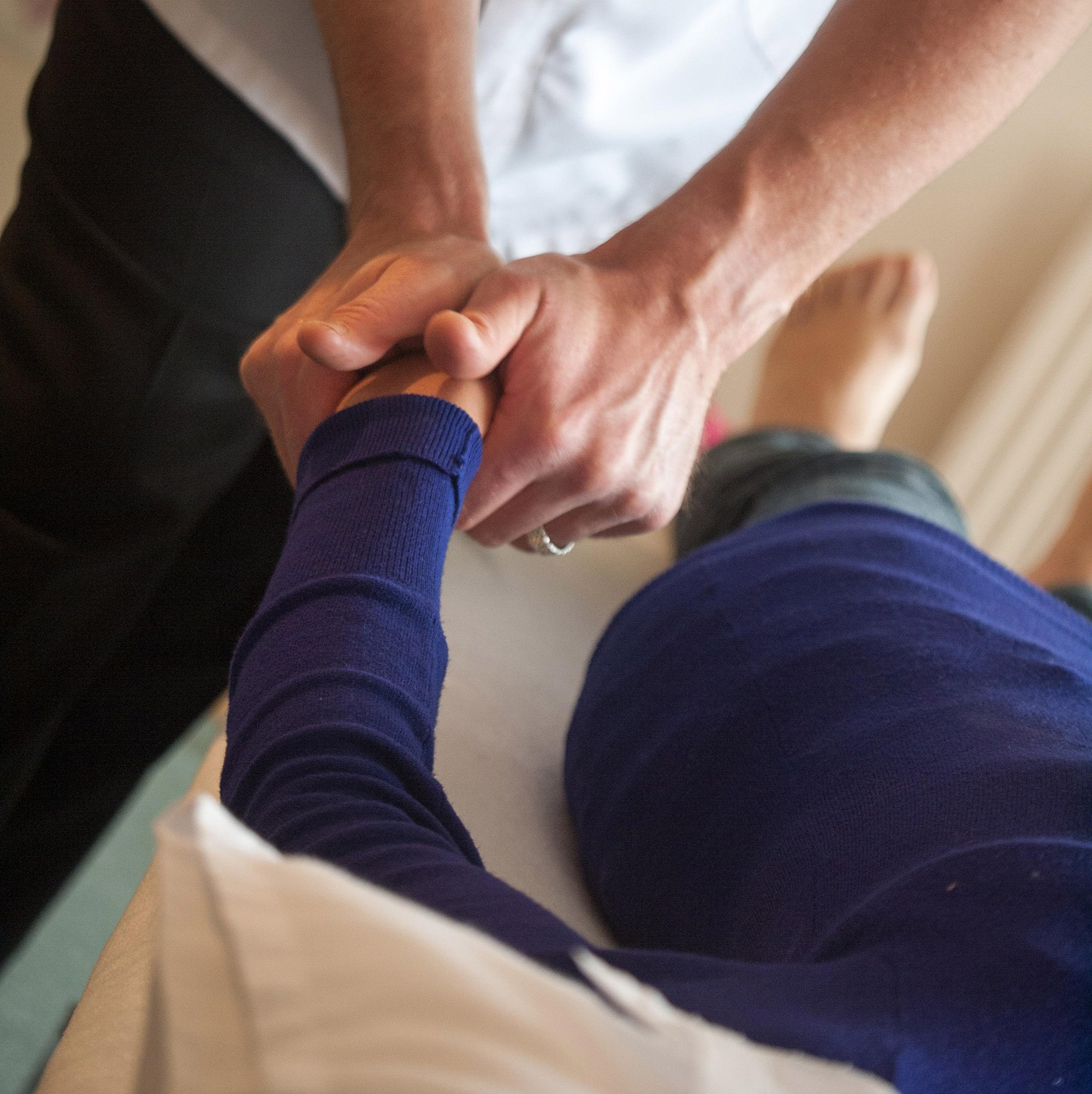
    The mechanism of treatment is gentle and pain free with the end result being 70% or more reduction in pain at the specific tender point assessed. With a specific point accurately determined, the associated structure is moved into a position of comfort- this is sometimes compression of the body, or just particular movement of a limb. Treatment for each structure is relatively short -often under 90 seconds—allowing the nervous system to recalibrate and remove the reflexive spasm in that fascial layer.


    Interactive Checking


    During the treatment of the various layers your therapist will get your feedback on the reduction of pain at the tender point and checking in with anything else you notice. This process will repeat until treatment time is up or the body reaches a balance point where it has had enough shifted and needs time to integrate. The prognosis of treatment is based on how many tender points, how long the condition has been going on, and how else the body is supported in one’s lifestyle choices.

    Common Patient Experiences

    2720 E. 50th St. Minneapolis, MN 55417

    © 2026 Eastern Shore Natural Health